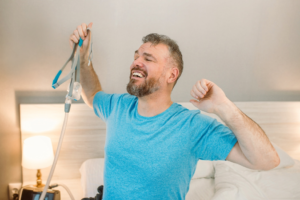
CPAP therapy has long been considered the gold standard for treating obstructive sleep apnea (OSA), since it’s highly effective at keeping the airway open throughout the night. That said, many patients still run into issues when using their machines, ranging from discomfort to noise to consistently wearing it each night. For this group, combined sleep apnea treatment, which involves pairing CPAP with a custom oral appliance, is often a far more comfortable and effective path to better nightly sleep. Here’s what you need to know.
What Makes CPAP Treatment Challenging for Some Patients?
Typically, CPAP therapy involves a patient wearing a soft mask over the nose and/or mouth to bed each night. It’s attached to a hose and special machine that delivers a steady, continuous stream of pressurized air to keep your airway open while you sleep.
While CPAP is highly effective when used consistently, one of its biggest challenges is simply using it nightly. Some patients find the full-face mask uncomfortable, claustrophobic, or difficult to keep in place. Other patients (and often their sleeping partners) find the machine too loud, or the hose may be awkward to manipulate.
It’s also worth mentioning that some patients may be dealing with bruxism (teeth grinding) alongside their sleep apnea symptoms. In these cases, CPAP alone may not provide the relief a patient is looking for!
How Exactly Does Combined Sleep Apnea Treatment Work?
Combined sleep apnea treatment involves wearing a custom-fitted oral appliance in the mouth at the same time as a CPAP mask. The oral appliance gently repositions the lower jaw and surrounding tissues to help keep the airway open, while the CPAP delivers a steady stream of air to prevent breathing interruptions.
Plus, because the oral appliance is already doing some of the work, the CPAP pressure settings can often be lowered! And since the CPAP mask only needs to cover the nose, rather than the nose and mouth, it tends to be far more comfortable to wear. Lower pressure settings also mean a quieter machine, making it easier to fall and stay asleep.
It’s also worth mentioning that research from the American Board of Dental Sleep Medicine has shown that combining CPAP with oral appliance therapy can significantly reduce the number of apnea events per hour compared to just using one treatment or the other. Not every patient needs combined therapy, but for those who haven’t found success with CPAP alone, it’s worth discussing this option!
About the Practice
Our team here at SleepMed Solutions has served the needs of patients in Greensboro for several years, offering a wide range of solutions designed to help you achieve the consistent sleep you deserve each night, including combined sleep apnea treatment. If you have any questions about the blog or you’re ready to schedule an appointment for yourself or a family member, you can contact us online or call us today for more information or assistance. Telephone: (336) 907-7902.