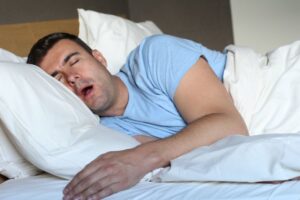
Do you sometimes wake up with a small puddle of saliva next to your face? Drooling is a common issue, and for many people, it is not a big deal. However, if it happens frequently, it might indicate a deeper — and much more serious problem. It could even point to the presence of obstructive sleep apnea! Just how are drooling and sleep apnea related? This blog post explains.
Common Causes of Drooling
Drooling during sleep does not always signal a serious condition. In many cases, its cause is relatively harmless. It might be the result of:
- Your sleep position, especially if you sleep on your side or stomach
- Nasal congestion from allergies, illness, or sinus irritation that causes you to breathe through your mouth
- Mouth breathing caused by a blocked nose or improper jaw position
- Certain medicines that increase saliva production or reduce swallowing
How Drooling Might Indicate Sleep Apnea
Obstructive sleep apnea (OSA) is a condition associated with repeated pauses in breathing during sleep. It occurs because the upper airway becomes blocked by over-relaxed tissues. Often, people with OSA snore and breathe through their mouth. In turn, mouth breathing can let saliva escape more easily, especially if your jaw relaxes and your lips part during the night.
Drooling alone does not confirm sleep apnea, but it can be a warning sign. If it happens regularly along with other signs of OSA, you should seek medical care.
When to Seek Professional Care
In addition to drooling, snoring, and mouth breathing, other potential signs of sleep apnea include:
- Daytime tiredness despite sleeping for 7 – 8 hours
- Frequent nighttime trips to the bathroom
- Observed pauses in breathing
- Poor concentration, mood swings, and other difficulties related to exhaustion
OSA can be diagnosed via a non-invasive test, which involves advanced equipment that monitors you while you sleep. After a qualified doctor looks at your results, they can let you know whether you have sleep apnea and how severe the condition is.
Fortunately, OSA is highly treatable. Your care team might recommend a CPAP machine, which uses pressurized air to prevent pauses in breathing. Other patients benefit most from a custom dental appliance, which gently repositions the lower jaw to allow for better breathing. If you consistently comply with your treatment, you should notice that you feel more rested every day — and you might experience a reduction in drooling as well!
Meet the Practice
At SleepMed Solutions, our Medical Director, Dr. Edward T. Sall, has both a dental degree and medical degree. Due to his expertise and that of our other providers, our team is able to offer sleep testing, CPAP therapy, and custom dental sleep appliances. To learn more about us or to request a consultation, contact our Greensboro office at 336-907-7773.