Did you know that sources estimate that approximately 1 in 5 (or about 20%) of adults suffer from a mild form of obstructive sleep apnea? This disorder occurs when your breathing periodically stops and restarts while you snooze, disrupting your natural circadian rhythms and preventing quality rest and recovery.
However, if you have a child who frequently snores at night or seems moodier than others during the day, you might wonder if kids can have sleep apnea, too. Continue reading to learn more about it!
Can Children Develop Sleep Apnea?
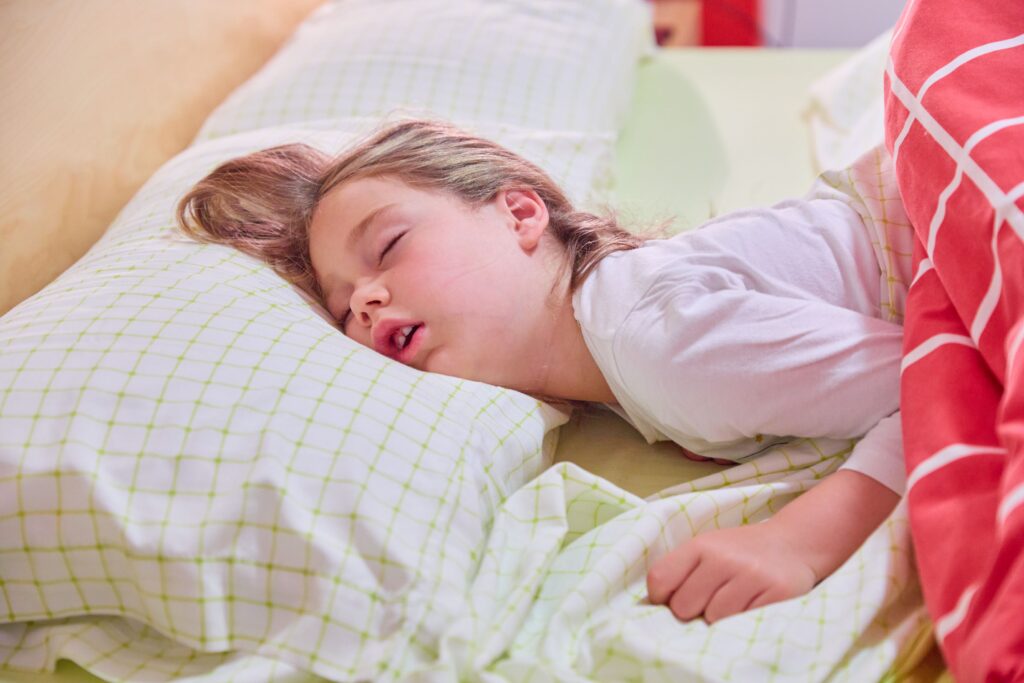
If you’ve noticed that your little one seems grouchy or sore when they wake up or snores often, you might question if children can have a disorder like sleep apnea. Unfortunately, people of any age can develop it, including kids. For instance, studies indicate that between 1% to 6% of adolescents are affected by obstructive sleep apnea, and that this condition makes up about 95% of their diagnosed nighttime disorders.
However, the reasons why younger people develop it can differ. For example, some kids have enlarged tonsils or adenoids that block their airways, while in adults, it’s often due to obesity or an improper bite alignment.
How Do I Know if My Child Has Sleep Apnea?
Snoring can often be an indicator that your child struggles to breathe at night, but it doesn’t always point to sleep apnea. Some additional signs that let you know they might have developed a problem can include:
- Gasping, coughing, or choking.
- Mouth breathing.
- Nighttime sweating.
- Bed-wetting that starts after a long period of dry nights.
You might also notice daytime symptoms, such as:
- Morning headaches.
- Trouble focusing, learning, or paying attention.
- Challenges succeeding at school.
- Behavior concerns such as hyperactivity, impulsiveness, or aggression.
- Poor weight gain.
- Expresses that they feel sluggish or frequently drifts off during car or bus rides.
How Can I Help Reduce My Child’s Sleep Apnea Symptoms?
Untreated sleep apnea in kids can contribute to other health concerns, including cognitive and growth delays or heart problems. If you suspect your child might have sleep apnea, getting a diagnosis is essential to pursuing treatment. Once their condition has been assessed, you can contact a sleep doctor or dentist for potential solutions.
Sometimes, undergoing surgery to remove the tonsils can help them get a better night’s rest. However, other services, such as getting a CPAP (continuous airway pressure) machine or an oral appliance that keeps their airways open, can also be beneficial.
If you’re still unsure how to address your child’s sleep apnea, contacting their dentist is a great place to start!
About the Practice
Patients at SleepMed Solutions benefit from a team of providers who can assess and treat sleep apnea from both medical and dental perspectives. With a physician’s assistant, dentist, and medical specialist on staff, they collaborate to provide a variety of services to help you or your child enhance your quality of sleep to improve your daily life. If someone in your family is struggling with nightly interruptions in their breathing, you can request an appointment on the website or call (336) 907-7773.